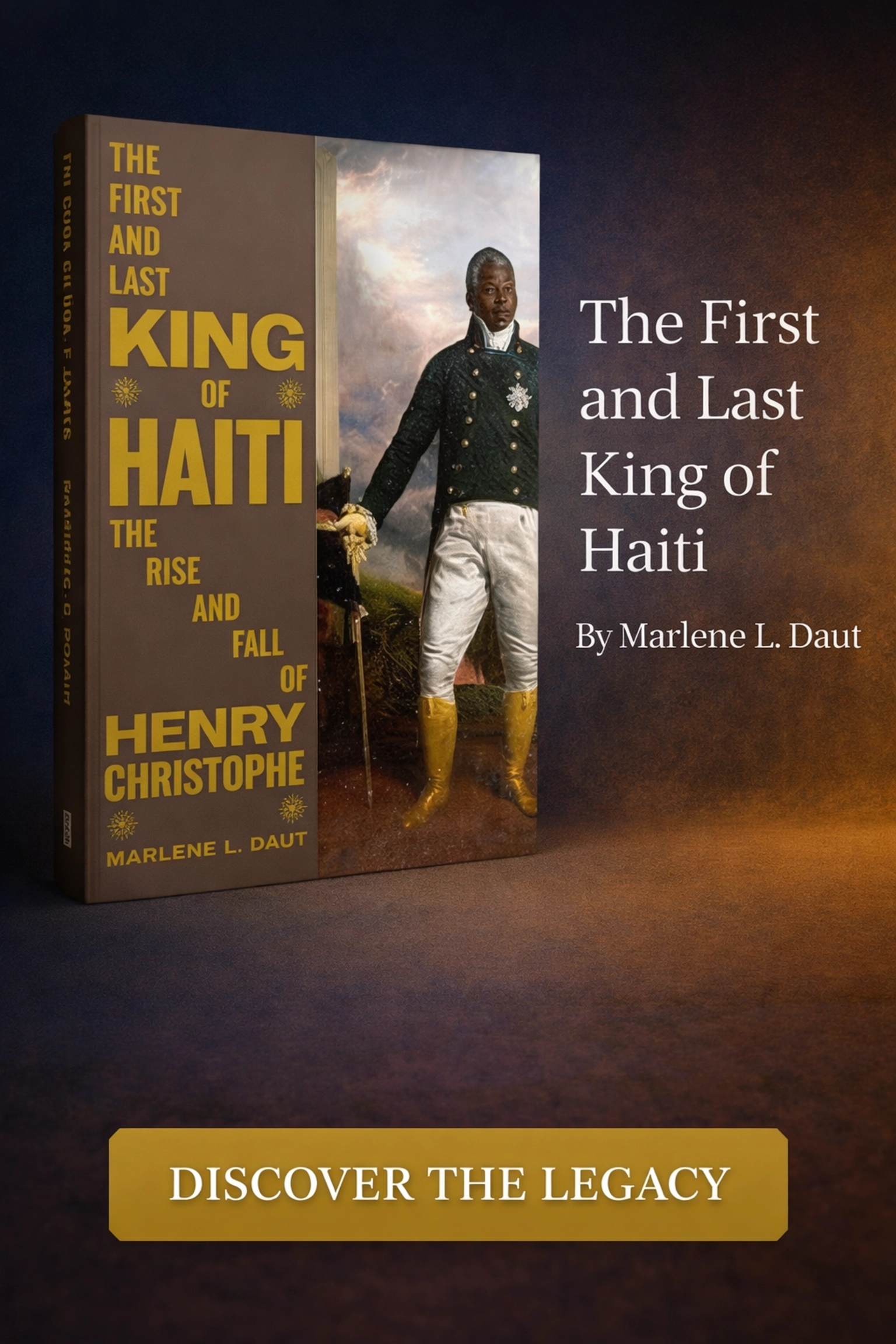
Overview: How did a single monarch’s refusal to negotiate sovereignty shape the DNA of Haitian independence? This week, 1804 Renaissance sits down with Yale professor Dr. Marlene Daut to explore the radical intellectualism of King Henri Christophe and his blueprint for a Black nation that refused to be bought.
The history of the Haitian Revolution is often told through the smoke of battle and the clash of iron, but for Dr. Marlene Daut, the more enduring struggle took place within the halls of the Kingdom of Haiti. In a wide-ranging conversation with 1804 Renaissance, Dr. Daut, a Professor of French and African American Studies at Yale University, dismantled the prevailing myths surrounding Henri Christophe: Haiti’s first and only king: revealing a leader whose commitment to intellectual and physical sovereignty was centuries ahead of his time.
Dr. Daut’s latest work, The First and Last King of Haiti: The Rise and Fall of Henry Christophe, serves as a meticulous investigation into a man often simplified as a tyrant or a tragic figure of legend. Instead, she presents an architect of the state who utilized print culture, diplomacy, and a radical education system to force a hostile world to acknowledge the permanence of Black freedom.
The "Inadmissible" Stance: A Lesson in Sovereignty
Perhaps the most resonant portion of the discussion centered on Christophe’s refusal to yield to French demands for an indemnity: a "debt" for the "lost property" of enslavers that would later cripple the Haitian economy under the presidency of Jean-Pierre Boyer.
“The word his ministers used was ‘inadmissible,’” Dr. Daut noted. “They’re not even going to listen to this conversation. No debate, no negotiations. It is simply inadmissible.”

Christophe’s administration viewed any financial payment for recognition as an affront to the blood shed during the revolution. His stance was not merely a point of pride but a strategic calculation. He understood that to pay for liberty was to admit that it had never truly belonged to the people. This "inadmissible" stance, Dr. Daut argues, offers a profound lesson for modern Haitian leadership and the international community.
“I think that that’s what we need to see today when people propose absurd solutions for Haiti,” she continued. “We need to consider that inadmissible.”
Education as National Defense
While the Citadelle Laferrière stands as a physical testament to Christophe’s military foresight, his intellectual defense was built through a network of schools. At a time when public education was a rarity even in the "developed" world, Christophe was recruiting British teachers to establish free public schools for both boys and girls.
“Christophe believed in education: free education for all boys and girls at a time when that was not common anywhere in the world,” Dr. Daut explained. This vision of Haitian history as a blueprint for excellence was supported by his collaboration with prominent British abolitionists like Thomas Clarkson and William Wilberforce. These intellectual alliances were not just for show; they were designed to prove to the global community that Haiti was the most progressive nation on earth.
Co-host Fritznel D. Octave highlighted the contemporary importance of this legacy, noting that reclaiming these narratives is the key to nation-building. “If you know your history, you have a very good chance of knowing who you are,” Octave remarked. “Haitians, we like to brag about it... but when we have people like yourself writing, telling the story the way it should be told, I think this is a beautiful thing.”
The Global King
The conversation also touched on Christophe’s birthplace: the British island of Grenada: a fact that Dr. Daut says was "hiding in plain sight" in historical records like the Almanach Royal. Yet, his origins only emphasize his absolute devotion to his adopted homeland. Christophe’s internationalist perspective allowed him to command respect from world powers, even while they refused formal recognition.
His navy, for instance, was instructed to capture slave ships entering Haitian waters, liberating the captives as "new Haitians." When a Spanish ship retaliated by kidnapping free Haitian citizens, Christophe’s response was swift and terrifying to the colonial governors.
“This was someone who forced the rest of the world to recognize that he really wasn’t playing with them,” Dr. Daut said. “That he was absolutely serious.”
Reclaiming the Narrative
Dr. Daut’s work is part of a larger effort to transition Haitian history from a "sidelined" narrative into its rightful place at the center of world history. By examining the architecture of sovereignty, we begin to see the Haitian Revolution not just as a successful slave revolt, but as a sophisticated project of statecraft.
As the platform concludes another vital episode, the message remains clear: the truth of the Haitian past is the most potent weapon for its future. As Dr. Daut concluded, quoting the late journalist Jean Dominique: “You cannot kill the truth. They can say whatever they want about us, but they cannot kill the truth.”
Key Insights from the Conversation
- Sovereignty is Non-Negotiable: Christophe’s refusal to pay the French indemnity highlights the difference between a state that negotiates its existence and one that demands its recognition as a right.
- Education as a Revolutionary Pillar: The Kingdom of Haiti’s focus on universal education for boys and girls was one of the most progressive social policies of the 19th century.
- The Power of Primary Sources: Much of Christophe’s history was preserved through the Kingdom's own printing presses. For those interested in the authentic records of the era, Dr. Daut recommends visiting marlenedaut.com to read the original newspapers and decrees.
5 Powerful Quotes
- Dr. Marlene Daut: "This was someone who forced the rest of the world to recognize that he really wasn’t playing with them: that he was absolutely serious."
- Fritznel D. Octave: "If you know your history, you have a very good chance of knowing who you are."
- Dr. Marlene Daut: "The word his ministers used [regarding the indemnity] was ‘inadmissible.’ They’re not even going to listen to this conversation. No debate, no negotiations."
- Dr. Marlene Daut: "You cannot kill the truth. They can say whatever they want about us, but they cannot kill the truth."
- Dr. Marlene Daut: "He believed in education: free education for all boys and girls at a time when that was not common anywhere in the world."
Uncover the True Story of the King
To understand the man who built the Citadelle and defied empires, you must read the definitive account of his life.