Overview: Have you ever felt a tug toward a land you’ve only seen in faded photographs or heard about through the filtered lens of evening news? For the Haitian diaspora, reconnecting with "the motherland" is rarely just a vacation: it is a profound reclamation of identity, a journey that transforms the "Diaspora Blues" into a narrative of empowerment and revolutionary pride.
![[HERO] Looking for Your Haitian Roots? 10 Things You Should Know About Reconnecting from the Diaspora](data:image/svg+xml,%3Csvg%20xmlns='http://www.w3.org/2000/svg'%20viewBox='0%200%200%200'%3E%3C/svg%3E)
For many in the diaspora, the search for "roots" begins with a feeling of displacement. Whether you are a second-generation professional in Miami, a student in Montreal, or an artist in Paris, the connection to Haiti often feels like a bridge under construction. We are the children of the 1804 revolution, yet many of us were raised in environments that taught us to look away from our heritage rather than toward it.
Reconnecting isn't just about finding a birth certificate in a dusty archive in Port-au-Prince; it’s about understanding the "why" behind our cultural DNA. As we enter this new era of the 1804 Renaissance, the mission is clear: we must reclaim our narrative to build our nation.
Here are 10 essential things you should know about navigating your journey back to your Haitian roots.
1. Reconnection is a Form of "Nations Building"
In the diaspora, we often view our interest in Haiti as a personal hobby or a family obligation. However, reclaiming your history is a political act. When you understand the nuances of the Haitian Revolution and the intellectual depth of our ancestors, you move from being a passive observer to an active participant in Haiti's future. Haitian history matters because a people who do not know their past are easily manipulated by those who wish to write their future.
2. The Power of the "Lakou"
According to scholar Charlene Désir, the concept of the Lakou is central to the Haitian way of life. Traditionally, a lakou is a shared family courtyard: a sacred space where multiple generations live, work, and worship together. For those in the diaspora, "finding your roots" often means identifying your family’s original lakou. It is here that ancestral knowledge is stored. Even if the physical walls are gone, the spiritual and communal ties of the lakou remain the blueprint for how Haitians practice reciprocity and mutual responsibility.
This image is AI generated
A conceptual representation of a traditional Haitian Lakou, where community and family heritage converge under the shade of a Mapou tree.
3. Beyond the "Bad" Label: An Honest Look at Spiritual Roots
One of the biggest hurdles for the diaspora is the stigma surrounding Vodou. For decades, Hollywood and external religious institutions have painted Haiti’s indigenous spirituality as "bad" or "dark." However, an honest look reveals that Vodou was the spiritual glue of the 1804 Revolution. It is a system of ancestral reverence, herbal medicine, and community resilience. Reconnecting with your roots requires looking past the propaganda to see how these traditions have shaped Haitian music, art, and the very concept of liberty.
4. Meet the Builder King: Henri Christophe
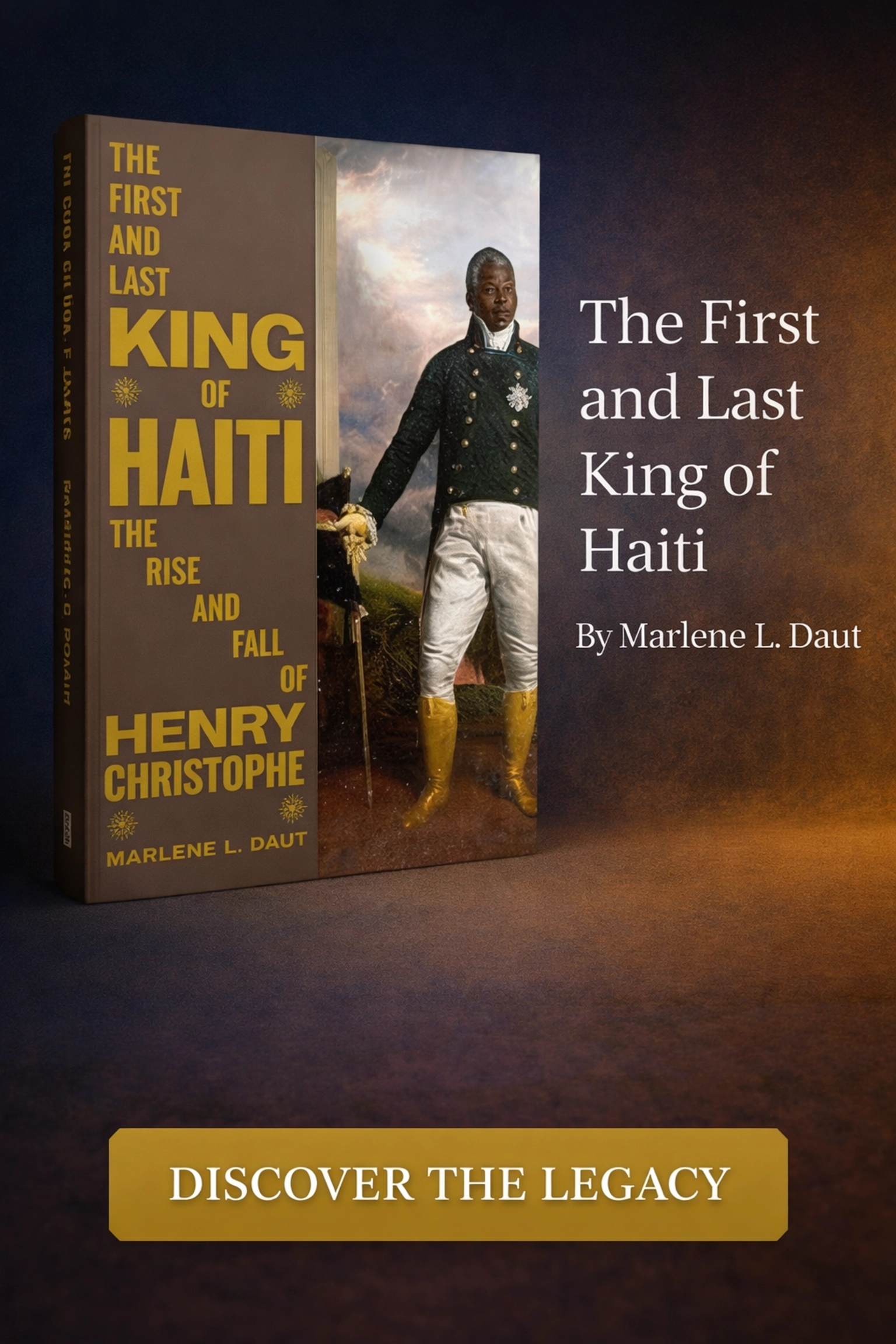
To truly understand the Haitian spirit of excellence, you must get to know Henri Christophe. Often called "The Builder King," Christophe was a visionary who understood that a new nation needed symbols of permanence. He commissioned the Citadelle Laferrière and the Sans-Souci Palace to prove to the world that Black people were capable of architectural and administrative genius. When you feel disconnected, look to Christophe. His legacy reminds us that being Haitian means being a builder, not just a survivor.
5. DNA is Only the Starting Point
While DNA tests can tell you that your ancestors likely came from the Benin/Togo, Nigeria (Yoruba, Igbo), or Cameroon/Congo regions, they cannot capture the "Haitian-ness" that was forged in the Caribbean. Research suggests that Haitian ancestry is a complex mosaic of multiple African ethnic groups who merged their languages and traditions to create something entirely new. Your "roots" are not just in Africa; they are in the revolutionary fire that blended those cultures into the first free Black republic.
Modern leadership in the diaspora is rooted in a deep understanding of historical excellence.
6. Language is Your Greatest Tool
Kreyòl is more than a "dialect" of French; it is the language of resistance. It was created so that people from different African tribes could communicate and plot their freedom. For the diaspora, learning Kreyòl is the single most effective way to "truly connect." It allows you to speak directly to the elders, understand the humor in the marketplace, and grasp the proverbs that hold the wisdom of the nation.
7. The "Digital Bridge" is Real
In 2026, the distance between the diaspora and the mainland is shrinking. We are seeing a digital bridge where tech-savvy Haitians abroad are using remote work, blockchain, and social media to revitalize the economy. Reconnecting today doesn't always require a plane ticket; it requires an internet connection and a willingness to collaborate with local entrepreneurs who are doing the work on the ground.
8. Musical Empowerment and Cultural Arts
Culture is the heartbeat of the island. Organizations like BLUME Haiti are showing how music education can harmonize leadership and provide a new vision for the nation. Whether it’s through Rara, Kompa, or classical training, engaging with Haitian music allows you to feel the rhythm of your history before you even learn the facts.
Music remains a powerful vehicle for cultural preservation and youth empowerment in Haiti.
9. Dealing with "Diaspora Blues"
It is okay to feel like an outsider. Many Haitians who grow up abroad experience a sense of "not being Haitian enough" for the island and "too Haitian" for their host country. This tension is what we call the "Diaspora Blues." The key is to realize that your perspective as a member of the diaspora is a superpower. You have the ability to see Haiti with both the love of a native and the analytical eye of an outsider.
10. Reciprocity over Tourism
Finally, know that reconnecting with your roots should never be a one-way street. The most fulfilling connections are built on reciprocity. Instead of asking what Haiti can give to you (in terms of identity or "vibes"), ask what your skills: whether in law, medicine, art, or tech: can offer back to the community. As we say in Kreyòl, "Men anpil, chay pa lou" (Many hands make the load light).
5 Powerful Quotes for the Diaspora
- "To reclaim our narrative is to reclaim our power; we are no longer the subjects of someone else’s story."
- "The Citadelle wasn't just a fortress; it was a statement that Black freedom is permanent."
- "Our ancestors didn't just survive; they designed a future they wouldn't live to see. We are that future."
- "Kreyòl is the sound of a people who refused to be silenced."
- "The diaspora is not a separate entity; we are the extended arms of the Haitian body politic."
3 Key Insights for Reconnecting
- Context Over Content: Understanding why certain traditions exist (like the Sunday tradition of Soup Joumou) is more important than just participating in them. The "why" is where the revolution lives.
- Intellectual Humility: When returning or reconnecting, listen more than you speak. The people living in Haiti have a PhD in resilience that no Western university can provide.
- Consistency is Key: Reconnection is not a one-time trip. It is a lifelong practice of reading, speaking the language, and supporting Haitian-led institutions.
A Path Forward
Reconnecting with your Haitian roots is a journey of unlearning as much as it is learning. It requires stripping away the layers of "poverty porn" and political instability that the media feeds us, and looking instead at the "Builder Kings," the musical masters, and the sacred lakous that define our true essence.
As part of the 1804 Renaissance, you are invited to be more than a descendant. You are invited to be a contributor to a legacy that is still being written. The bridge is built. The ancestors are waiting. Are you ready to cross?
This image is AI generated
A conceptual overhead view of a bridge made of light connecting a modern city skyline to the lush, green mountains of Haiti, symbolizing the digital and cultural link of the diaspora.